From L'Estartit to France: Cadaqués, Collioure and Gruissan
A cross-border route: from the Montgrí massif in the north of the Costa Brava round Cap de Creus to France's Côte Vermeille with Collioure and Banyuls, then on to the sandy Languedoc coast, where 1960s resort marinas sit behind the lagoons. The loop of about 145 nm from L'Estartit has legs of three to five hours, nights in marinas and two in the coves of Cap de Creus — one on a buoy, one at anchor. Spain and France are both in Schengen, so the border is crossed by sea without formalities. The one thing to keep in mind: this is the home of the tramontane, and Cap de Creus is rounded only on a good forecast.
Day by day
L'Estartit
- L'Estartit42.053, 3.204
Boat handover in the marina at the foot of the Montgrí massif, opposite the Medes Islands. Girona airport is an hour's drive away; provisioning in town and an evening stroll along the seafront.
L'Estartit → Port Lligat
- Medes Islands42.047, 3.222
- Port Lligat (Cadaqués)42.293, 3.291
- Rosesmarina42.256, 3.179
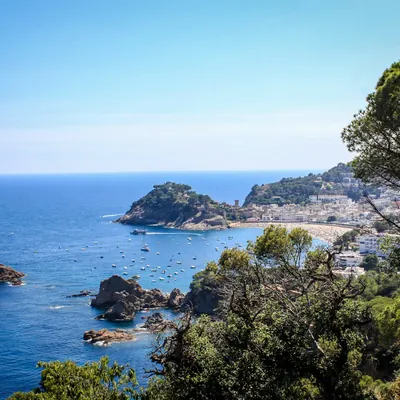
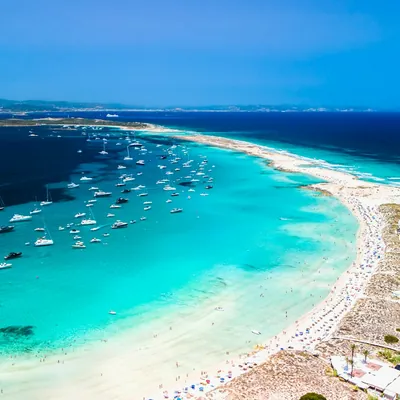
Past the Medes Islands and across the Gulf of Roses to the Cap de Creus peninsula, about three hours. Enter Port Lligat north of the island — the southern passage is shallow; night on a visitor buoy. Ashore is Salvador Dalí's house-museum (book tickets ahead), and Cadaqués is about twenty minutes' walk away.
Port Lligat → Saint-Cyprien
- Cap de Creus42.320, 3.330
- Collioure42.527, 3.088
- Saint-Cyprien42.620, 3.038
- Banyuls-sur-Mermarina42.481, 3.137
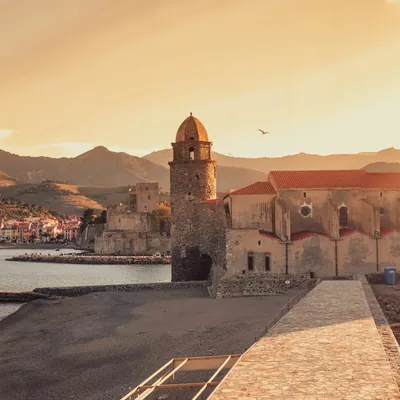
Round Cap de Creus, the easternmost point of the Iberian Peninsula, past El Port de la Selva and over the border along the Côte Vermeille. Lunch off Collioure, the old harbour whose bell tower Matisse and Derain painted; night in the big marina of Saint-Cyprien.
Saint-Cyprien → Gruissan
- Gruissan43.108, 3.099
- Port Leucatemarina42.865, 3.040
North along the low, sandy Languedoc shore past the cliffs of Cap Leucate. Into Gruissan along a mile and a half of buoyed channel — keep strictly to it; the old village rings the ruined Barberousse tower, and Narbonne, with its cathedral and a stretch of the Roman Via Domitia, is about fifteen minutes away by bus.
Gruissan → Canet-en-Roussillon
- Canet-en-Roussillon42.704, 3.035
Back south along the Roussillon beaches. Canet-en-Roussillon is a marina by a lagoon with bird-watching hides, and Perpignan, with the Palace of the Kings of Majorca, is about 12 kilometres away.
Canet → Garbet bay
- Garbet bay (Colera)42.393, 3.158
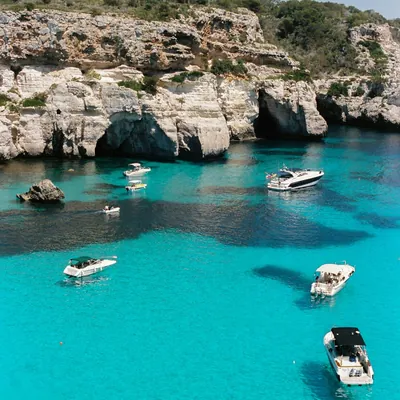
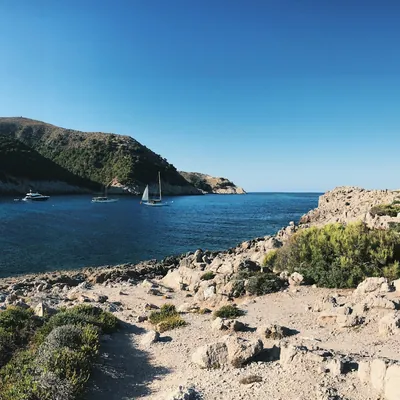
Past Argelès under the Albères mountains, along Collioure, Banyuls and the Cerbère–Banyuls marine reserve, and back over the border. Night at anchor in Garbet bay near Colera: a pebble beach, clear water and quiet before the run home; the bay is open to the east.
Garbet → L'Estartit
- L'Estartit42.053, 3.204
- El Port de la Selvamarina42.340, 3.202
Round Cap de Creus a second time and across the Gulf of Roses home, about five hours. Refuelling and handover.
Coordinates are approximate, for the harbour or bay. Paste them into Google Maps or a chartplotter, and check the chart and pilot book before you moor or anchor.
Good to know
- The tramontane, the north-westerly of the Gulf of Lion, blows here more often and harder than anywhere else on the route, and accelerates to gale force at Cap de Creus. Round the cape only on a calm-day forecast; in a tramontane, wait in Roses or L'Estartit. In a fresh onshore wind the entrances of the Languedoc lagoon ports — Gruissan, Saint-Cyprien, Canet — are dangerous with breaking seas. The best months are June and September.
- Protected areas: at the Medes Islands anchoring is banned — buoys only; the Cap de Creus natural park restricts some coves, and the Port Lligat buoys should be booked ahead in summer. In the French Cerbère–Banyuls marine reserve fishing is forbidden and anchoring is restricted — use the reserve's buoys. Keep off posidonia meadows on both sides of the border.
- The border: Spain and France are both Schengen and EU, so you can call at French ports without formalities, with the same boat papers and skipper's licence. The Languedoc marinas are large and in season easier for a berth than the Costa Brava coves, but in July and August it is still wise to book.
- Logistics: Girona airport is about 55 kilometres from L'Estartit, Barcelona about 150. Perpignan airport is twenty minutes from Canet — handy if part of the crew arrives or leaves mid-week.
How to get to the marina
- Port de L'Estartit (Club Nàutic Estartit)
- Girona (GRO) — 55 km, 45 min by carBarcelona El Prat (BCN) — 150 km, 1.5 h by car
45–55 min · €90–120 per car
Taxi from Girona airport arrivals along the motorway and via Torroella de Montgrí to L'Estartit harbour.
45–55 min · €25–60 per day
Rental at Girona airport; there is parking near L'Estartit harbour, but for the charter week it is easier to return the car.
1.5–2 h · €180–250 per car
Pre-booked transfer from Barcelona airport: the driver meets you in arrivals, about an hour and a half on the AP-7 motorway.
1.5–2.5 h · €8–14 per person
Bus from the airport to Girona bus station (about 25 minutes), then the regional bus to L'Estartit — about an hour, every two to three hours.
From Barcelona, the high-speed train to Girona takes about forty minutes; from there, bus or taxi to L'Estartit.
Prices are autumn 2026 estimates in euros; times are without traffic. Bus and ferry timetables change with the season, so check them before you travel.
When to go and what it costs in Spain
Median € per berth per week from the agent's latest check, monohulls; each month's page has both boat types, a chart and boats departing that month.
Discounted boats in Spain
All boats in Spain




How long is the L'Estartit — Gruissan route and where do you stay overnight?
7 days and about 147 nautical miles in a loop, starting and finishing in L'Estartit. Overnight stops in order: L'Estartit, Port Lligat (Cadaqués), Saint-Cyprien, Gruissan, Canet-en-Roussillon, Garbet bay (Colera). The longest leg is day 4, 29 nm.
How do I get to the marina for the L'Estartit — Gruissan route?
The route starts and finishes at Port de L'Estartit (Club Nàutic Estartit). The nearest airport is Girona (GRO), 55 km away. Fastest: taxi, 45–55 min, €90–120 per car. Cheapest: bus, 1.5–2.5 h, €8–14 per person.
When is the best time to sail the L'Estartit — Gruissan route?
In the Balearics the season runs May to October. July and August are the peak: marinas are expensive and full, so you anchor or pick up a buoy. June and September bring warm water and lower prices; May and October are the shoulder months. In winter people sail in the Canaries, a separate area. By the agent's latest checks (monohulls), the cheapest month is October: a median of €260 per berth per week. The most expensive is January, at €300. The most boats with 20% off or more are in October: 45%. The agent checks the current month and the next five; each month has its own page with the numbers.
How much does a yacht for this route cost?
A whole boat in Spain for a week starts from €1,148 in the agent's current selection: the cheapest discounted week departing in the next three months. Prices per berth by month are higher up the page; the boats are under “All boats in Spain”.
Do I need a licence to charter a yacht?
For a bareboat charter (no skipper or crew provided), yes: a skipper's licence and, as a rule, a VHF radio certificate. Without a licence, we add a skipper, paid separately from the boat price.
What's included in the boat price?
Just the boat, for a week. Usually paid separately: transit log and final cleaning, fuel, marina fees, the security deposit (or deposit insurance), a skipper, cook and hostess if you need them, and extras (SUP board, on-board Wi-Fi, coffee machine, child safety netting).