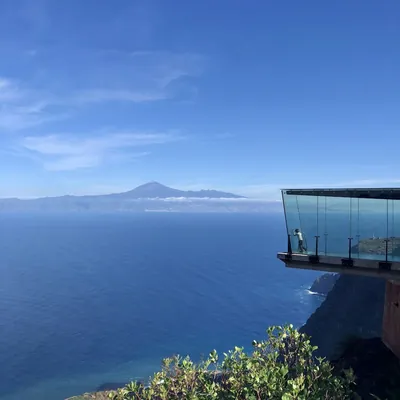
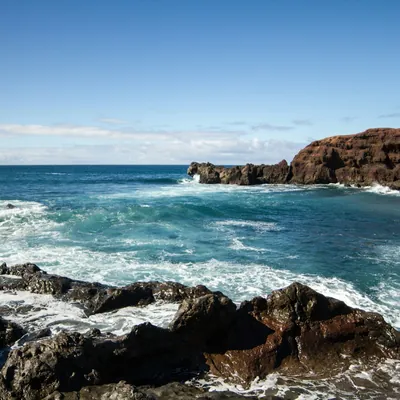
Three Canary Islands in a week: Tenerife, Gran Canaria, La Gomera
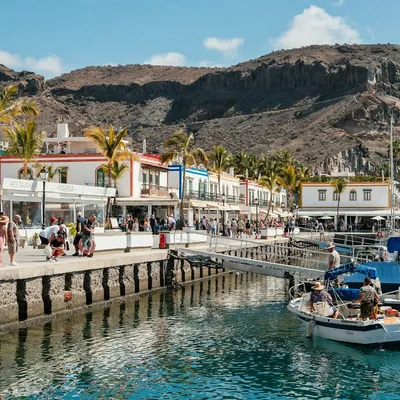
A week of open Atlantic between three islands: Gran Canaria's capital Las Palmas, where the ARC rally yachts set off across the ocean every autumn, the quiet south-west of the island with the canals of Puerto de Mogán, Tenerife's south coast under the Teide volcano, and La Gomera, where Columbus last took on water before the New World. The loop of about 225 nm from Radazul on Tenerife's east coast has two big crossings of 47–55 nm between Tenerife and Gran Canaria, two channel crossings to La Gomera and back, and a final coastal leg against the trade wind. It is a route for a crew experienced in long open-sea passages.
Day by day
Radazul (Tenerife)
- Radazul (Tenerife)28.401, -16.321
Boat handover in a small marina south of Santa Cruz de Tenerife, twenty minutes from Tenerife North airport. Provisioning and preparation for tomorrow's long day: jacklines, lifejackets, a watch plan.
Radazul → Las Palmas
- Las Palmas de Gran Canaria28.127, -15.426
The channel crossing to Gran Canaria, nine to ten hours on a beam reach in the trade wind, leaving at dawn. Into Las Palmas round the La Isleta peninsula; night in the big Muelle Deportivo marina, and in the evening the old Vegueta quarter with the Columbus house.
Las Palmas → Puerto de Mogán
- Maspalomas lighthouse27.729, -15.587
- Puerto de Mogán27.817, -15.765
- Pasito Blancomarina27.747, -15.621
South down the east coast past the Maspalomas lighthouse and dunes, then into the island's lee in the south-west, where the trade wind dies away. Puerto de Mogán is a marina with canals and little bridges, nicknamed Little Venice.
Mogán → San Miguel (Tenerife)
- Marina San Miguel (Tenerife)28.023, -16.613
The crossing back to Tenerife on a broad reach, seven to eight hours, with the cone of Teide growing ahead all day — at 3,718 metres the highest point in Spain. Night in Marina San Miguel on the island's lee south coast.
San Miguel → San Sebastián (La Gomera)
- San Sebastián de La Gomera28.088, -17.108
- Los Cristianostown quay28.048, -16.719
Round Punta de la Rasca and across the channel to La Gomera, leaving early before the trade wind accelerates in the channel. San Sebastián is the port where Columbus last took on water before the Atlantic in 1492; night in the marina.
San Sebastián → Las Galletas
- Las Galletas28.007, -16.660
Back across the channel, through waters where pilot whales live all year. Las Galletas is a fishing village with the Marina del Sur; dinner is fish straight off the boats at the quay.
Las Galletas → Radazul
- Candelaria28.353, -16.366
- Radazul (Tenerife)28.401, -16.321
The last leg runs north-east up Tenerife's east coast, against the trade wind and with the engine helping, leaving at first light. On the way, the Basilica of Candelaria on the shore. Refuelling and handover in Radazul.
Coordinates are approximate, for the harbour or bay. Paste them into Google Maps or a chartplotter, and check the chart and pilot book before you moor or anchor.
Good to know
- Trade wind: the north-easterly blows for most of the year and is strongest in summer, and it accelerates between the islands and off their tips — in the channel between Tenerife and Gran Canaria and off Gran Canaria's south-east corner it can blow 25–30 knots while the coast is moderate. All channels are crossed from first light. If the forecast for a crossing is above 25 knots, Gran Canaria is dropped and the week stays between southern Tenerife and La Gomera.
- The last day is 31 nm against the trade wind along a coast where it also accelerates: allow six to eight hours with the engine and leave before dawn. Fill up with fuel the day before in Las Galletas or San Miguel.
- Berths: ocean swell comes in from the north even on calm days, so marinas are the safer choice for the night. In October and November Las Palmas fills with yachts before the ARC start, and Puerto de Mogán is small all year — book ahead. The waters between Tenerife and La Gomera are a protected marine area with pilot whales and bottlenose dolphins: never close in on them; slow down and let them move off.
- Season and logistics: the best months are October to May; winter days are shorter, so plan the long legs for daylight. Tenerife North airport is twenty minutes from Radazul, Tenerife South forty; sailing between the Canary Islands needs no formalities.
How to get to the marina
- Puerto Deportivo Radazul, Tenerife
- Tenerife North (TFN) — 22 km, 20 min by carTenerife South (TFS) — 55 km, 40 min by car
20–30 min · €30–45 per car
Taxi from Tenerife North arrivals via Santa Cruz and the TF-1 southern motorway to Radazul.
40–50 min · €70–90 per car
Taxi from Tenerife South north along the TF-1 motorway, exit for Radazul past Candelaria.
20–45 min · €25–50 per day
Rental at either airport; for the charter week it is easier to return the car, as you will hardly need it.
1–1.5 h · €3–6 per person
TITSA bus from the airport to the Santa Cruz bus station, then a suburban bus to Radazul; a little over an hour in all.
Most flights from Europe land at Tenerife South, but Radazul sits on the motorway between the two airports, so either works.
Prices are autumn 2026 estimates in euros; times are without traffic. Bus and ferry timetables change with the season, so check them before you travel.
When to go and what it costs in the Canary Islands
Median € per berth per week from the agent's latest check, monohulls; each month's page has both boat types, a chart and boats departing that month.
Discounted boats in the Canary Islands
All boats in the Canary Islands





How long is the Tenerife — Gran Canaria route and where do you stay overnight?
7 days and about 225 nautical miles in a loop, starting and finishing in Tenerife. Overnight stops in order: Radazul (Tenerife), Las Palmas de Gran Canaria, Puerto de Mogán, Marina San Miguel (Tenerife), San Sebastián de La Gomera, Las Galletas. The longest leg is day 2, 55 nm.
How do I get to the marina for the Tenerife — Gran Canaria route?
The route starts and finishes at Puerto Deportivo Radazul, Tenerife. The nearest airport is Tenerife North (TFN), 22 km away. Fastest: taxi, 20–30 min, €30–45 per car. Cheapest: bus, 1–1.5 h, €3–6 per person.
When is the best time to sail the Tenerife — Gran Canaria route?
The Canaries are sailed all year round. October to April is the main season: the Mediterranean is cold, while here it is warm and the weather settled. In summer the trade wind is stronger and accelerates to 25 knots and more between the islands, which suits experienced crews. By the agent's latest checks (monohulls), the cheapest month is March: a median of €304 per berth per week. The most expensive is February, at €342. The most boats with 20% off or more are in December: 11%. The agent checks the current month and the next five; each month has its own page with the numbers.
How much does a yacht for this route cost?
A whole boat in the Canary Islands for a week starts from €1,573 in the agent's current selection: the cheapest discounted week departing in the next three months. Prices per berth by month are higher up the page; the boats are under “All boats in the Canary Islands”.
Do I need a licence to charter a yacht?
For a bareboat charter (no skipper or crew provided), yes: a skipper's licence and, as a rule, a VHF radio certificate. Without a licence, we add a skipper, paid separately from the boat price.
What's included in the boat price?
Just the boat, for a week. Usually paid separately: transit log and final cleaning, fuel, marina fees, the security deposit (or deposit insurance), a skipper, cook and hostess if you need them, and extras (SUP board, on-board Wi-Fi, coffee machine, child safety netting).